

Inertia-action shotguns occupy a fairly unique place in the world of gun designs, and while they offer some excellent and unique advantages, they also present a unique lubrication and reliability challenge as well.
The biggest challenge stems from a design that, unlike with gas or recoil operated shotguns, requires the entire gun to physically move backward to cycle. Not just the barrel and bolt, as with recoil guns, or the bolt and action bars with a gas shotguns. An inertia action needs to have the entire gun move backward as a unit a short distance, with enough velocity, before the buttstock encounters enough sudden resistance to stop the gun’s rearward movement.
Until that very moment, the bolt is locked up with the rest of the gun, allowing for the chamber to depressurize. But it’s that sudden stop of rearward movement that unlocks things, allowing the inertia and momentum of the bolt and carrier to keep moving rearward, eject the hull, and then cycle forward again under the power of the mainspring.
It’s an elegantly simple concept, minimizing weight and parts complications, and overall also allows for remarkably clean cycling compared to other shotgun designs.
However, it also comes with one inherent problem: such guns have a narrower Window of Reliability than gas or recoil operated shotguns. One that is significantly complicated by human factors, especially in the field.
As you’ll likely already know from reading our website’s content, the Window of Reliability is that window between applied energy on one side, and resistance on the other. Applied energy is used to cycle the action, while resistance is the cumulative resistance to cycling coming from the mass of the moving parts, the power of various springs involved, and overall friction factors, such as the cumulative amount of friction surface and roughness of those surfaces. To cycle reliably, a gun’s action simply needs to have more applied energy to its moving parts than the cumulative resistance they experience. The wider that difference, generally, the wider the Window of Reliability.
With inertia guns, however, there’s a complication – one that is very similar to a common cause of malfunction in semi-auto handguns: limp-wristing. Or in this case, limp-shouldering.
When a pistol experiences “limp wristing”, where the wrists aren’t locked up or applying enough resistance to the frame while the slide cycles backward, the frame of the gun will actually be rotating backward underneath the slide while it’s moving, resulting in a type of short-stroking of the action. Relative to the speed of the slide, that frame rotation during slide travel is slowing down the speed of the slide. And that narrows the Window of Reliability as the rotation of the frame backward, conceptually, is somewhat robbing energy and cycling speed out of the slide. That same gun in a vise will have its widest Window of Reliability, with zero relative speed loss between slide and frame.
But if you placed an inertia-action shotgun in a vice, it would not cycle at all – it needs rearward movement of the entire gun, even just a short distance, then a sudden stop, for the bolt and carrier to continue to move backward, unlock, and cycle.
The flip side of this, is a limp shoulder won’t provide enough sudden resistance after a short travel rearward, and the gun experiences something closer to limp-wristing a pistol.
With too much continued rearward travel of the shotgun after the bolt and carrier have unlocked, trying to cycle independently of the rest of the gun, it induces that similar type of short-stroking of the system.
A limp shoulder is far less of an issue with a gas gun or recoil gun. Especially the heavier one is, where that weight will help the gun stay in place better while the action does its job, minimizing shooter-induced short stroking. But one of the great advantages of carrying an inertia-action shotgun in the field, stemming from just how many fewer parts they need, is how light this helps them to be – and that actually helps its cycling. The gun moves backward faster than a heavier gun.
But it still needs resistance in the shoulder.
Anything that slows down or makes gradual that sudden stop of the shotgun moving backwards can complicate things – shooting from an awkward position where the shoulder moves more freely or the stock’s not tucked firmly up against it, wearing a big, padded waterfowling jacket, or simply being slight of frame and not applying resistance with the torso or overall body being common ones.
And the energy side of the Window of Reliability still applies – the lower the recoil energy of a cartridge, the slower that gun will move rearward simply because less energy is being applied, including into its moving parts. This is why, historically, some shooters or some inertia-driven shotguns could have trouble cycling low-base dove, quail, or trap loads, while running fine on high-base waterfowl or turkey loads.
As with energy, reducing friction inside the gun to reduce the energy loss to the moving parts can also open up that Window of Reliability. And that’s where our lubricants come in.
Interestingly enough, during our R&D on shotgun lubrication, we discovered that inertia-action guns occupy an energy band much closer to what’s experienced inside rimfires, than gas or recoil shotguns. You can get insight with this yourself in just cycling the action – recoil or mainsprings inside inertia actions are significantly lighter that those of recoil or gas guns. And their bolt and carrier are also usually significantly lighter.
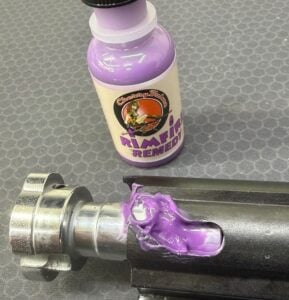
Consequently, while our Black Rifle Balm is most optimal for recoil and gas-operated guns, it emerged that our Rimfire Remedy is the most optimal of our lubricants for inertia-action shotguns, in temps above freezing.
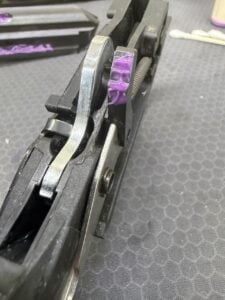
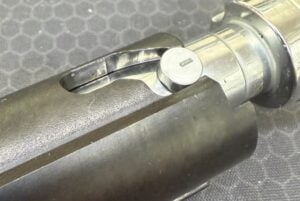
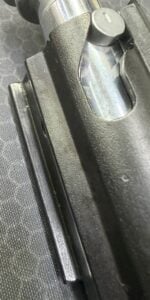
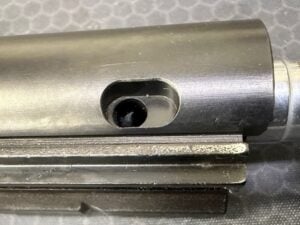
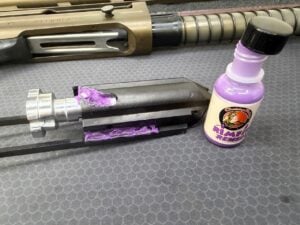
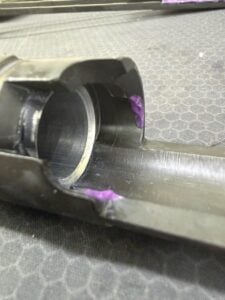
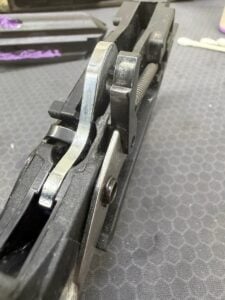
Equally fortunate, is that most inertia-action shotguns also seem to have minimal friction surface – making them quick and easy to lubricate. In most of them, it comes down to these parts:
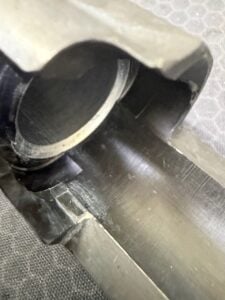
- Cam pin
- Cam channel
- Frame rails for the bolt carrier
- The rail tabs on the bolt carrier
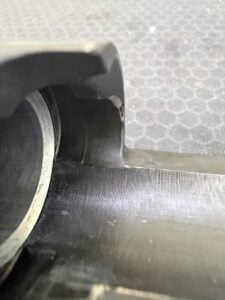
- Optional for a finicky gun: bolt lugs and bolt lug recesses at barrel.
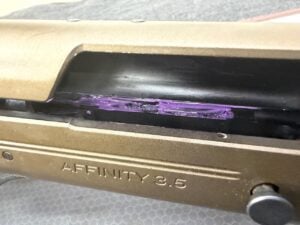
One of the more interesting things we discovered on a lot of inertia-driven guns, is that many get minimal or no cycling reliability improvement from lubricating the bolt lugs, for a couple of reasons that are just a little different from what you find with other designs.
First, is that after depressurization of the chamber, they don’t seem to be under a lot of friction and they only begin unlocking well after that moment. ARs, for example, maintain several ft/lbs of bore pressure during bolt unlock when unsuppressed, and quite a bit more if suppressed. Second, because inertia guns tend to run so cleanly, they don’t get fouled there much, and just don’t need it. ARs, however, get fowled there heavily, and that fowling carries a lot of super-heated lead and copper fouling, which degrades lubricants and adds to the fouling. And finally, with shotgun actions generally being so open to the elements, it seems that any kind of oil or grease on those lugs tended to accumulate friction contaminant and physical material, exceeding the benefits of lubrication in these designs. All of this was enhanced further by just how common high-quality, low-friction coatings are on the shotgun bolts and often lug recesses in inertia-driven shotguns.
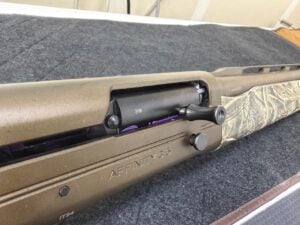
All of this tracks with our R&D and data over time that bolt lugs should not be lubed in semi-automatic designs, just for somewhat different reasons than with gas or recoil guns. However, on the occasional, uncommonly finicky inertia-driven gun, there did appear to sometimes be a benefit to lubricating lugs. The best bet in discovering your need, is to simply shoot come clays with low-recoiling ammo, in whatever hunting shirt or jacket you’d expect to wear in the field this year.
Good luck with your bird seasons this year! And as always, please feel welcome to reach out to us with any gun lubrication science or applications you may have!